
Robotic grass mowers offer a smarter, more efficient way to maintain lawns with minimal human intervention. As automation continues to reshape outdoor maintenance, these high-tech machines gain popularity among professional landscapers looking to reduce labor costs and improve consistency.
Unlike traditional mowers, automatic models use GPS, navigation powered by artificial intelligence (AI) and sensor technology. This allows them to operate autonomously, delivering precise uniform cuts while minimizing fuel consumption and emissions. With demand for low-maintenance, cost-effective lawn care on the rise, robotic grass mowers are quickly becoming pivotal for businesses aiming to stay ahead.
The Growing Demand for Automation in Landscaping
The landscaping industry — employing over one million people and representing more than 600,000 service businesses — faces growing challenges due to labor shortages and rising operational costs. As wages increase and the pool of skilled workers shrinks, many companies struggle to meet demand while maintaining profitability.
These pressures drive the adoption of automation, which helps companies improve efficiency and reduce labor dependency. Commercial robotic grass mowers have emerged as an excellent solution because they allow landscaping businesses to cut costs while delivering consistent, high-quality lawn care.
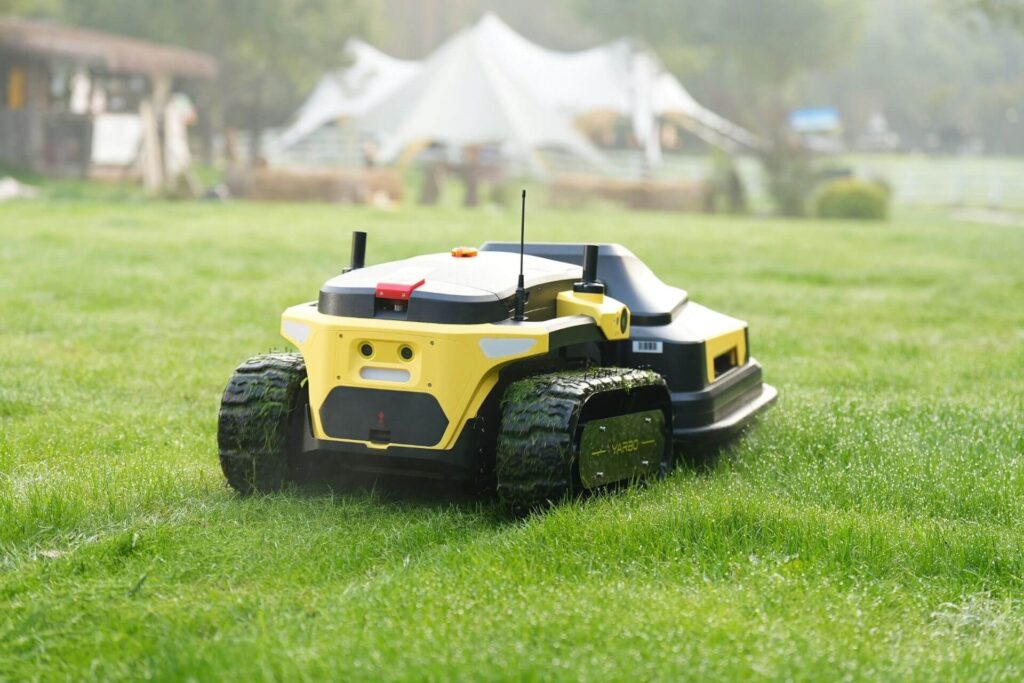
How Robotic Grass Mowers Work
Robotic mowers use sensors, GPS and AI-powered navigation to deliver precise and efficient lawn care with minimal human oversight. With obstacle-detection sensors, these machines navigate around trees and flower beds while following optimized mowing patterns through GPS mapping. AI-driven technology allows them to adapt to different terrains, adjust cutting height and maintain a consistent trim across large areas.
Many models also connect to mobile apps to give users real-time control over scheduling and performance. In addition, mowing lawn robots range from compact units designed for homes to powerful, commercial-grade robotic lawn mowers capable of handling golf courses, parks and large properties. Continuously trimming grass rather than cutting it all at once promotes healthier laws while saving time, labor and maintenance costs for professionals.
Benefits for Professional Landscapers
For professional landscapers, efficiency and cost-effectiveness are crucial to staying competitive in a demanding industry. Robotic grass mowers reduce labor costs, improve mowing consistency and provide an eco-friendly alternative to traditional gas-powered equipment.
Consistency
Robotic grass mowers provide a uniform, high-quality cut with minimal human intervention, making them an efficient solution for professional landscapers. One of the biggest challenges in lawn maintenance is mowing sloped terrain, which can be time-consuming, physically demanding and challenging to maneuver with traditional equipment.
Advanced mowers use traction control, AI-driven navigation and adaptive sensors to maintain stability and precision. Robotic lawn care eliminates the hassle of uneven cuts, reduces manual labor and improves efficiency while delivering a consistently well-manicured finish on any terrain.
Efficiency
Robotic lawn cutters help landscaping businesses reduce labor costs by automating routine mowing. This frees crews to focus on higher-value tasks like landscape design, irrigation and customer service.
With labor shortages and rising wages impacting the industry, the best robot lawn mowers offer a cost-effective solution that minimizes the need for manual mowing while maintaining consistent quality. Reallocating resources to more specialized work can increase productivity and enhance service offerings.
Cost Savings
Investing in robotic grass mowers provides landscaping businesses with a strong long-term return on investment by reducing fuel, maintenance and labor costs. With the average landscaping project costing between $3,300 and $13,200, finding ways to cut operational expenses while maintaining high-quality service is essential.
Unlike traditional gas-powered mowers, automatic models run on electricity, which lowers fuel costs and requires less maintenance due to fewer moving parts. These savings make robotic models a cost-effective alternative for professionals looking to increase efficiency and improve margins.
Eco-Friendliness
Robotic grass mowers are a cleaner and quieter alternative to traditional gas-powered mowers. Eliminating fuel consumption reduces carbon emissions and promotes more eco-friendly lawn care. Noise pollution is also significantly lower, as most models operate between 60 and 70 decibels — about the same level as a normal conversation.
This makes them ideal for commercial properties, parks and residential areas where reducing noise disturbances is a priority. With sustainability becoming a crucial focus in landscaping, robotic models provide a practical solution that balances efficiency with environmental responsibility.

Challenges and Considerations
While robotic mowers offer numerous benefits, professionals should evaluate several challenges before making the switch. Here are some crucial considerations to keep in mind:
- Upfront investment: Robotic mowers require a significant initial investment, though long-term labor and maintenance savings can offset costs.
- Terrain limitations: While many models handle slopes well, extremely uneven or complex landscapes may require manual mowing.
- Weather sensitivity: Some mowers may struggle in heavy rain or extreme temperatures, impacting their performance.
- Installation and setup: Most models require perimeter wiring or GPS mapping, which can take time and effort to configure correctly.
- Maintenance and repairs: Although they have fewer moving parts than gas mowers, their robotic counterparts still need regular cleaning, software updates and occasional maintenance.
Maximizing Automation for a More Profitable Future
Robotic grass mowers shape the future of lawn care by providing a more efficient and eco-friendly alternative to traditional mowing methods. As automation continues transforming the landscaping industry, professionals embracing this technology can increase efficiency, reduce costs and improve profitability.
Leave a Reply